



Whether you’re planning a simple backyard patio or a complete outdoor living space, it’s common to receive estimates that differ by several thousand dollars. At first glance, the proposals may appear nearly identical. Both include pavers, excavation, installation, and cleanup—so why the dramatic price difference?
The answer is that not all paver patios are built the same.
The quality of a patio isn’t determined by the pavers you see on the surface. It’s determined by the preparation underneath them, the installation methods used throughout the project, and the attention given to details that will never be visible once construction is complete.
As a Spokane landscaping company, Wall & Company believes homeowners deserve to understand what they’re paying for before making a significant investment. In many cases, the lowest quote simply reflects a different level of construction—not necessarily a better value.
Details You'll Never See: Gravel Depth
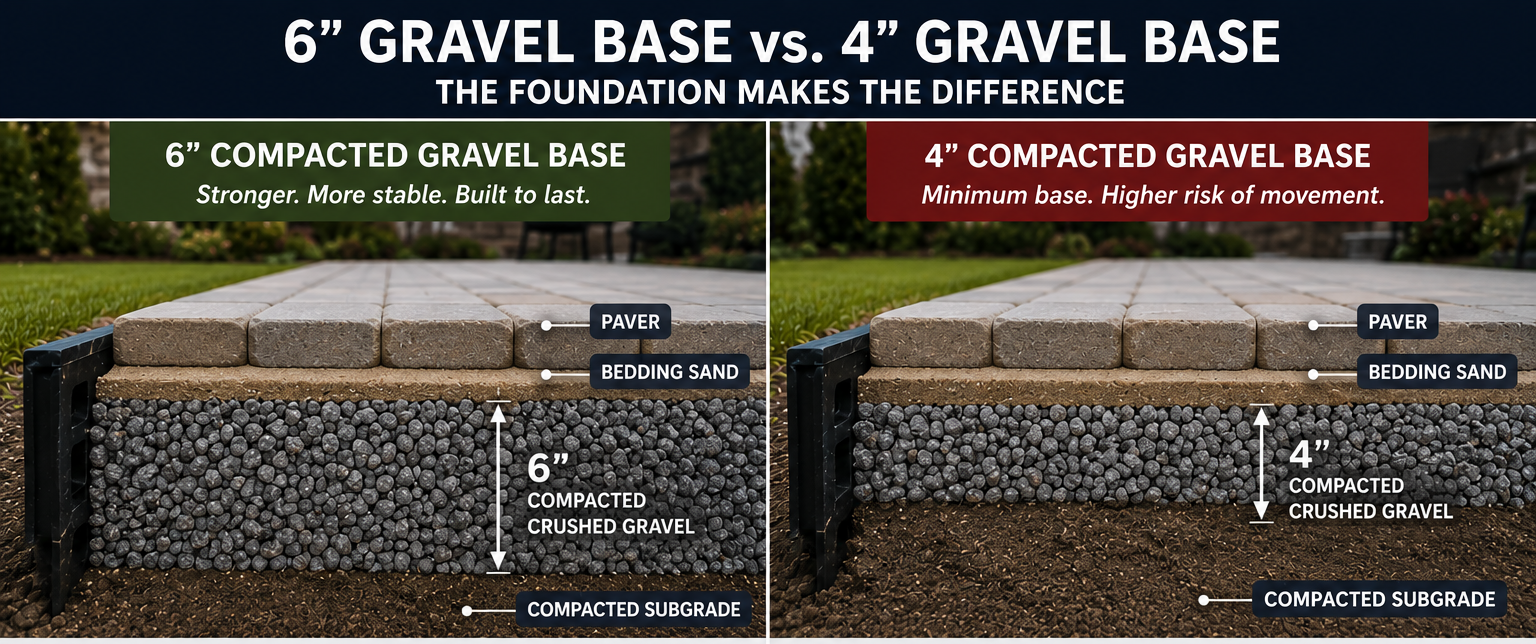
While many landscape contractors install 4″ of compacted gravel, Wall & Company installs a minimum of 6″ multi-lift compacted base. This makes your patio more stable, makes for better drainage and reduces the likelihood of shifting over time.
Premium Installation vs. Budget Installation
| Hidden Difference | Premium Installation | Budget Installation |
|---|---|---|
| Excavation | Full-depth excavation | Minimal excavation |
| Gravel Base | Minimum 6″ compacted | 3–4″ or less |
| Base Compaction | Multiple compacted lifts | Single-pass compaction |
| Edge Restraints | 10″ spikes every 6″ | Wider spike spacing |
| Joint Sand | Premium polymeric sand | Basic joint sand or lower-quality polymeric sand |
| Drainage Planning | Designed for site conditions | Minimal consideration |
| Materials | Premium installation system | Economy materials |
| Long-Term Performance | Built for decades of performance | Greater potential for settling and repairs |
Details You'll Never See: Edge Spike Distance
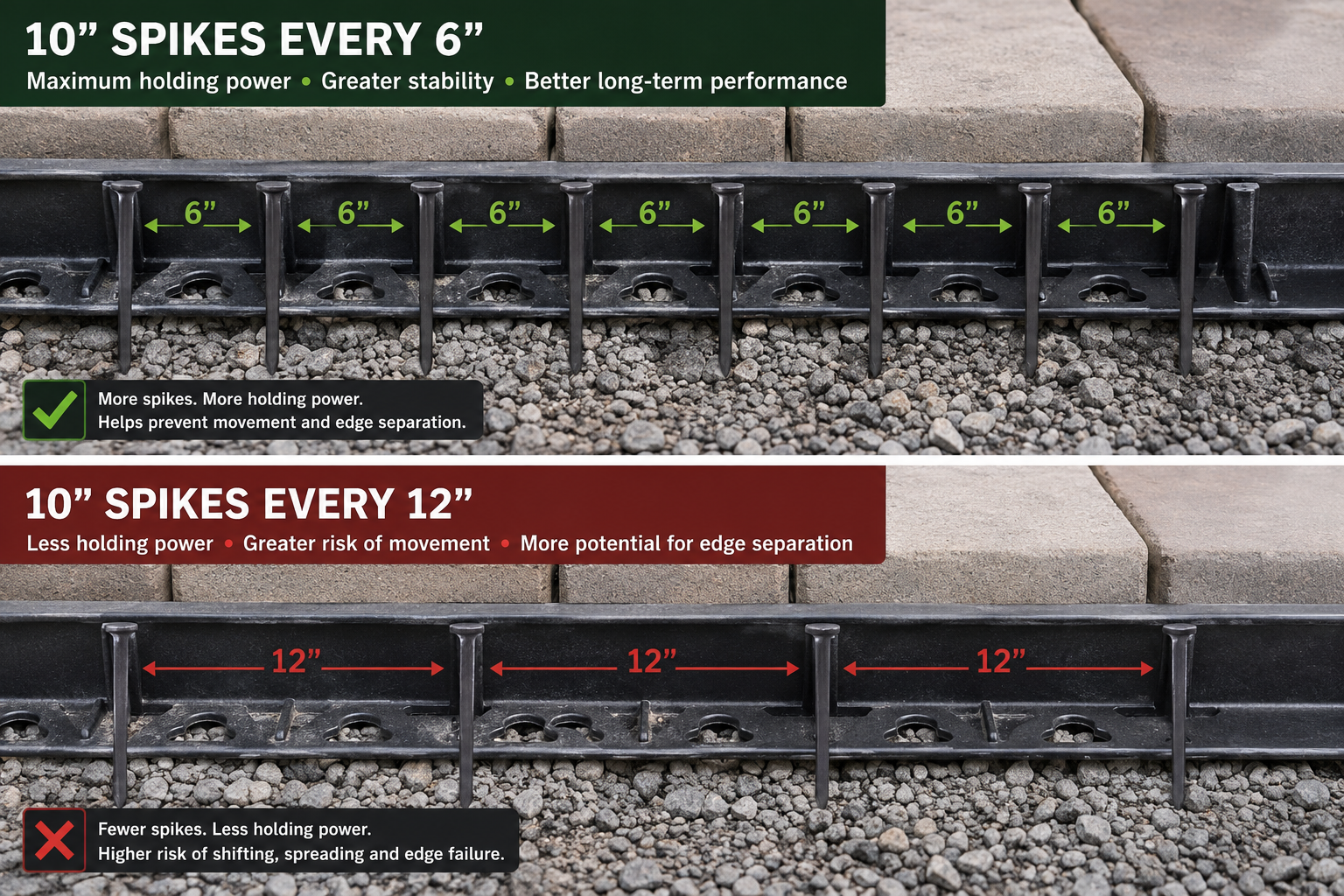
While many companies save on labor and material cost by spacing edge spikes every 12″, Wall & Company’s standard procedure is to place commercial-grade spikes every 6″. This makes your pavers less likely to shift over time, keeping your patio looking great for decades, not just years.
Wall & Company’s Minimum Construction Standards
| Standard | Wall & Company’s Minimum Standard |
|---|---|
| Excavation | Proper excavation for the project’s foundation requirements |
| Compacted Gravel Base | Minimum 6-inch compacted gravel base |
| Base Compaction | Multiple compacted lifts |
| Edge Restraints | 10-inch spikes installed every 6 inches |
| Joint Stabilization | Premium polymeric joint sand, properly installed and activated |
| Drainage | Planned for the property’s specific conditions |
| Our Commitment | Build every project as if it were our own home. |
The Hidden Details That Affect Price
1. Proper Excavation
Every durable patio begins below ground.
Excavation isn’t simply removing enough soil for the pavers. It creates room for the structural layers that support the patio for years to come. If excavation is reduced to save time or hauling costs, there may not be enough room for an adequate foundation.
That shortcut often isn’t visible until years later, when settling or uneven surfaces begin to appear.
2. The Foundation Beneath the Patio
The gravel base is the structural backbone of every paver patio.
At Wall & Company, every patio includes a minimum 6-inch compacted gravel base. Some installations use only three or four inches to reduce material and labor costs.
While both patios may look identical when completed, a properly constructed foundation is better equipped to withstand Spokane’s freeze-thaw cycles, seasonal moisture changes, and years of foot traffic.
| Gravel Base | Expected Long-Term Performance |
|---|---|
| Minimum 6″ Compacted Base | Greater stability and long-term durability |
| 3–4″ Base | Increased potential for settling and movement |
3. Multi-Lift Compaction
Installing six inches of gravel isn’t enough by itself.
How that gravel is compacted matters just as much.
Rather than placing the entire base at one time, premium installations compact the gravel in multiple lifts. Each layer is compacted before the next is installed, producing a denser, more uniform foundation.
Although this process requires additional time and labor, it helps create a patio designed to remain stable for many years.
4. Edge Restraints
Edge restraints help keep the entire patio locked together.
Without adequate restraint, pavers can gradually spread outward, allowing joints to widen and surfaces to shift.
Wall & Company secures edge restraints using 10-inch spikes spaced every 6 inches.
Some contractors use much wider spacing to reduce installation time and material costs.
It’s one of those details homeowners rarely see—but one that can make a significant difference in the long-term stability of the patio.
| Edge Installation | Premium Construction | Budget Construction |
|---|---|---|
| Spike Length | 10 inches | Varies |
| Spike Spacing | Every 6 inches | Often every 12–18 inches |
5. Joint Sand: A Small Detail That Makes a Big Difference
The sand between the pavers does much more than fill the joints.
Many premium installers use polymeric joint sand, a specially engineered product that contains fine sand blended with binding agents. Once activated with water, it hardens within the joints while still allowing for normal seasonal movement.
When properly installed, polymeric sand helps:
- Lock the pavers together
- Reduce weed growth
- Discourage ants and other insects from nesting
- Resist erosion caused by rain and irrigation
- Improve the overall stability of the patio surface
Like every other component of a quality patio, installation matters. The joints must be thoroughly cleaned before activation, and the correct amount of water must be applied. Too much or too little water can affect the final performance.
6. Drainage Planning
Water is one of the biggest threats to any hardscape installation.
A properly designed patio directs water away from the home and prevents it from collecting beneath the pavers.
Drainage planning may include:
- Proper finished slope
- Surface water management
- Consideration of surrounding landscape
- Integration with existing drainage systems when appropriate
Although drainage is rarely visible after construction, it’s one of the most important elements of a successful installation.
7. Skilled Installation
Even when two contractors use the same pavers, the finished product may look dramatically different.
Attention to craftsmanship includes:
- Consistent laying patterns
- Uniform joint spacing
- Precision saw cuts
- Smooth transitions
- Accurate elevations
- Professional finishing details
These details don’t just improve appearance—they also contribute to the long-term performance of the patio.
Other Features That Affect Patio Pricing
Not every price difference comes from construction methods alone. Homeowners often choose to add features that increase both functionality and project complexity.
| Feature | Typical Impact on Cost |
|---|---|
| Outdoor kitchen | Significant |
| Built-in grill | Moderate to significant |
| Outdoor pizza oven | Moderate to significant |
| Seating walls | Moderate |
| Landscape lighting | Moderate |
| Decorative borders | Moderate |
| Multiple paver colors | Moderate |
| Custom laying patterns | Moderate |
| Steps or elevation changes | Moderate to significant |
These upgrades create beautiful outdoor living spaces but naturally require additional materials, planning, and labor.
Questions Every Homeowner Should Ask Before Hiring a Contractor
When comparing estimates, don’t be afraid to ask detailed questions.
| Question | Why It Matters |
|---|---|
| How deep will you excavate? | Determines whether there’s room for a proper foundation. |
| How much compacted gravel will you install? | Affects long-term stability. |
| Is the gravel compacted in multiple lifts? | Produces a stronger foundation. |
| How are your edge restraints installed? | Helps prevent paver movement over time. |
| What type of joint sand do you use? | Influences weed resistance, erosion, and paver stability. |
| How do you manage drainage? | Protects the patio from moisture-related issues. |
| What warranty do you provide? | Demonstrates confidence in the quality of the installation. |
Remember: You’re Comparing Two Different Products
Although two finished patios may look nearly identical on the day they’re installed, they may not be built the same beneath the surface.
When comparing estimates, don’t simply compare the bottom-line price. Compare the excavation, base preparation, compaction methods, edge restraints, joint stabilization, drainage planning, and warranty. Those hidden details often determine whether a patio performs beautifully for decades—or begins showing signs of movement after only a few seasons.
As a trusted Spokane landscaping company, Wall & Company believes homeowners should have the information they need to make an informed decision. We welcome questions about our construction methods because we believe an educated customer is our best customer.